The Basic Rule: Floor Space at Your Feet
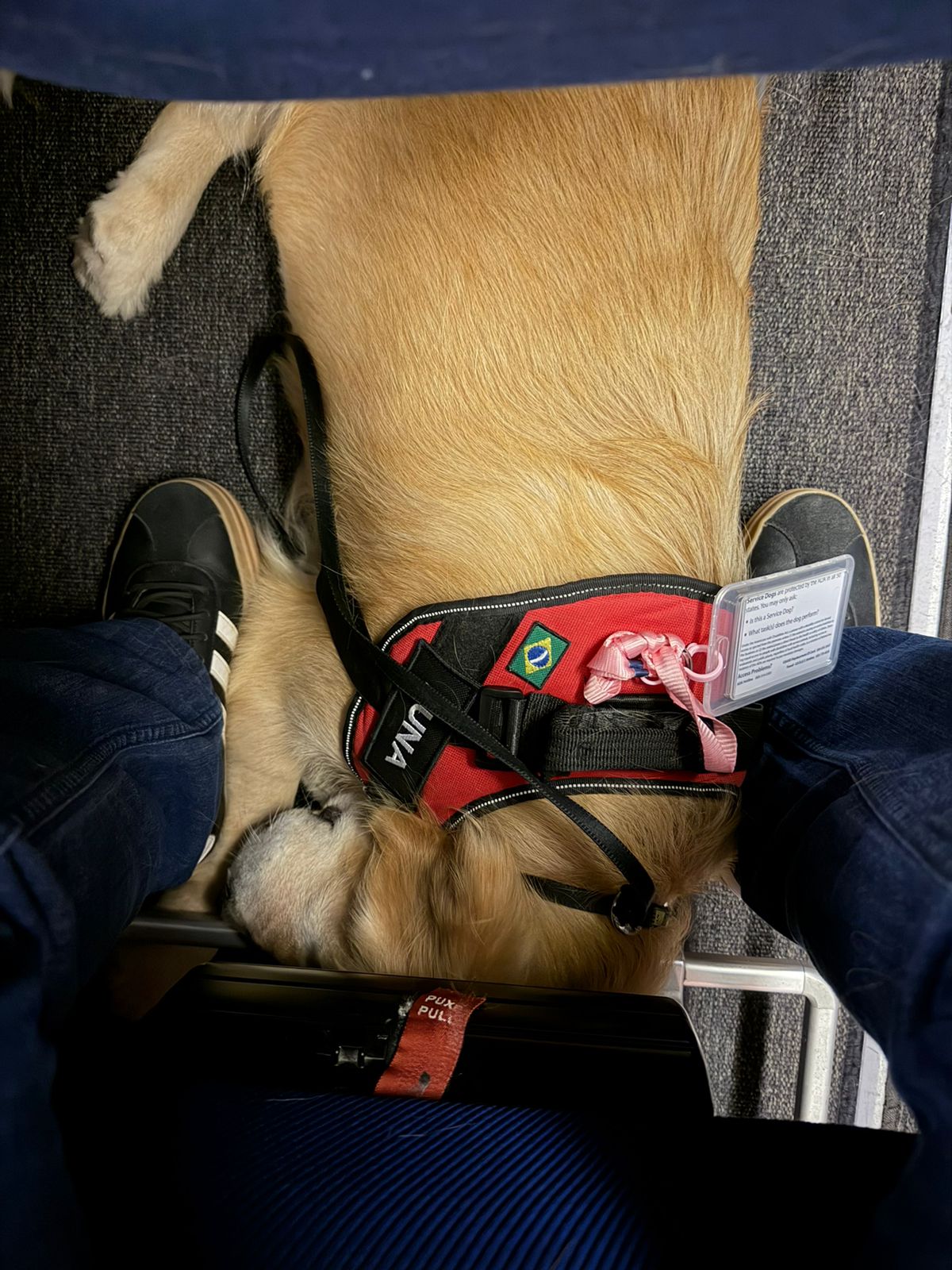
Under the Department of Transportation's (DOT) regulations implementing the Air Carrier Access Act, your service dog must sit on the floor in front of your seat, on your lap if the dog is small enough, or at your feet. The dog cannot occupy its own seat, sit in the aisle, or block emergency exits. This applies to every U.S. airline regardless of the aircraft type.
The floor space in front of a standard economy seat is roughly 20 inches wide and 30 inches deep. For small to medium service dogs, this is typically sufficient. However, for larger breeds like Golden Retrievers, Labrador Retrievers, or German Shepherds, the space can be tight — which is why seat selection matters enormously.
Why Bulkhead Seats Are the Gold Standard
Bulkhead seats — the first row in any cabin section — offer significantly more floor space because there is no seat in front of you. Instead, you have a solid wall or divider, and the open floor area can be double or triple the legroom of a standard seat. For handlers with medium or large service dogs, bulkhead seating is the most practical option.
Most airlines will accommodate a bulkhead seat request when you notify them in advance that you are traveling with a service dog. This is considered a reasonable accommodation under the ACAA. Call the airline's accessibility desk at least 48 hours before your flight to make this request.
Airline-by-Airline Seating Policies
Delta Air Lines
Delta requires service dog handlers to submit the DOT Service Animal Air Transportation Form at least 48 hours before departure. The airline allows service dogs in all cabin classes. Delta's policy states that the dog must fit within the handler's foot space without encroaching into the aisle or neighboring passenger's space. Bulkhead seating can be requested through Delta's Accessibility Services line.
United Airlines
United has a similar 48-hour advance notice requirement. The airline permits service dogs in economy, business, and first class. United specifically notes that if the service dog cannot fit in the floor space of a standard seat, the handler may request a different seat assignment at no extra cost. United's accessibility team can be reached at their dedicated phone line listed on united.com.
American Airlines
American Airlines requires the DOT form to be submitted through their website or via their Special Assistance Coordinators. The dog must remain on the floor at your feet throughout the flight. American allows handlers to request bulkhead seating and recommends doing so for dogs weighing over 40 pounds. If the aircraft configuration allows it, they will accommodate the request.
Southwest Airlines
Southwest uses open seating, which means there are no assigned seats. However, service dog handlers are eligible for preboarding. This is a significant advantage — by boarding first, you can select a bulkhead seat or any row with extra legroom. Southwest requires the DOT form to be completed at the gate or in advance. Preboarding ensures your dog has the best possible floor space.
JetBlue
JetBlue requires advance documentation and permits service dogs in all seat types. The airline's "Even More Space" seats offer extra legroom that can benefit larger service dogs. JetBlue's accessibility team can help with seat assignments when contacted at least 48 hours before departure. The airline has been praised by handlers for generally accommodating bulkhead requests.
Size Considerations and Practical Tips
If your service dog weighs under 25 pounds, virtually any seat will work. The dog can curl up in the floor space or sit on your lap during the flight. For dogs between 25 and 50 pounds, a window or aisle seat with decent legroom is usually sufficient. For dogs over 50 pounds, request a bulkhead seat every time — it is the only way to ensure both you and your dog are comfortable for the duration of the flight.
Other tips for managing seat space:
- Window seats give your dog a wall to lean against and keep them out of the aisle
- Avoid middle seats entirely — the floor space is the most restricted
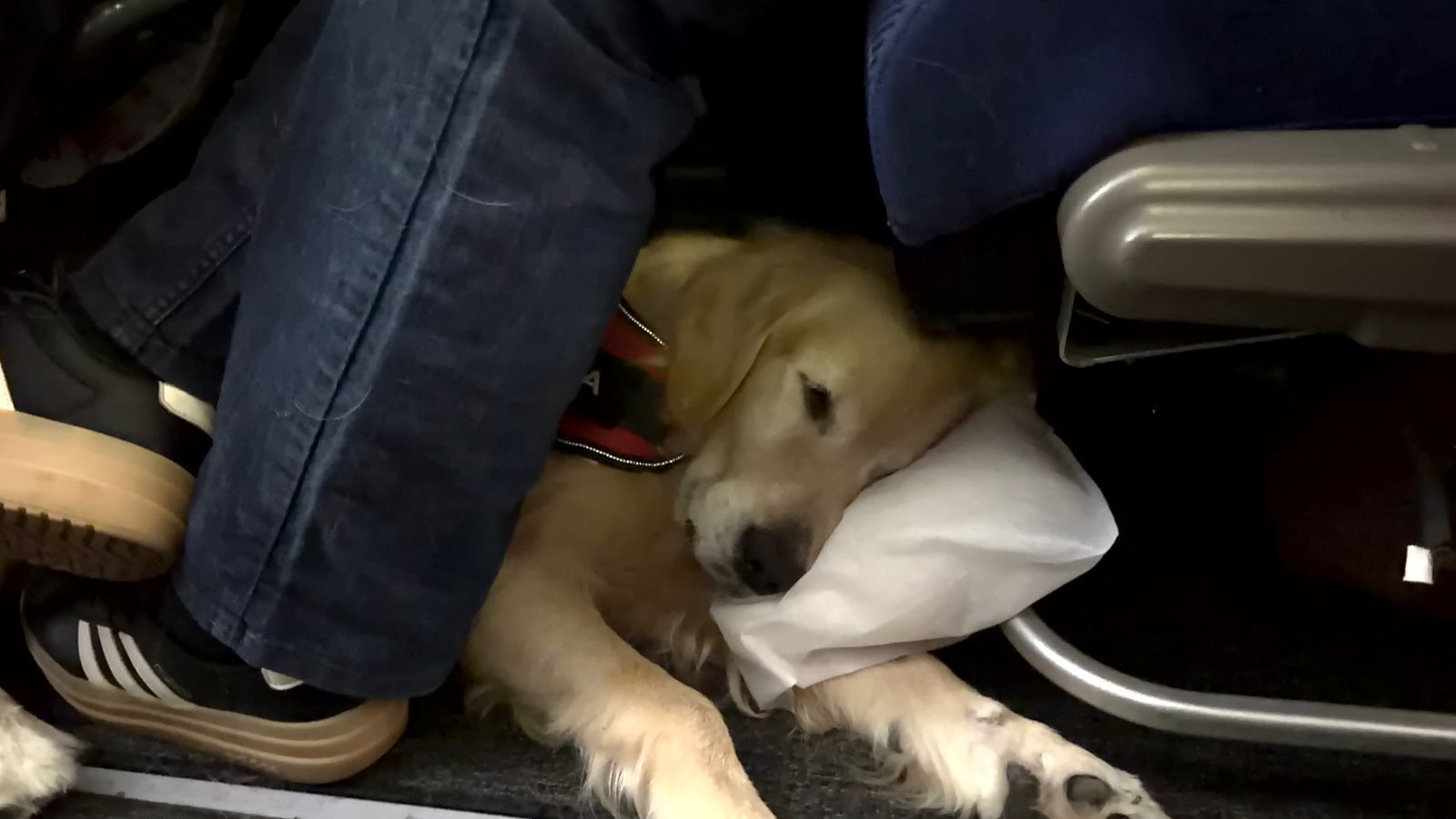
- Bring a compact mat or blanket for your dog to lie on; hard aircraft floors can be cold
- If your dog naturally curls up rather than stretching out, standard legroom may work even for medium breeds
Create Your Service Dog Profile
Get your digital ID card, certificate, and QR verification page — instantly after registration.
Start Free Registration →What If Your Dog Doesn't Fit?
Airlines cannot deny boarding to a trained service dog solely because of the dog's size. However, DOT rules do state that the dog must be able to fit within the handler's foot space without extending into the aisle or another passenger's area. If a standard seat cannot accommodate your dog, the airline must attempt to reseat you in a location where the dog can fit — such as a bulkhead row or a row with an empty adjacent seat.
In rare cases where no suitable seating is available on that specific aircraft, the airline may offer to rebook you on a different flight with a larger aircraft. They cannot charge you for this change.
Documentation That Speeds Up the Process
While the ACAA does not require a service dog ID card, having one dramatically reduces friction at the gate and onboard. A ServiceDog Profile digital ID with QR verification allows airline staff to quickly confirm your dog's status without lengthy conversations. Many experienced handlers report that presenting a professional ID card and verification profile makes the entire boarding process faster and smoother.
Bottom Line
Your service dog sits on the floor at your feet — that's the rule across all airlines. The practical question is whether the floor space is large enough, which depends on your dog's size and the seat you choose. Book a bulkhead seat whenever possible, notify the airline 48 hours in advance, and arrive prepared with your documentation. With the right seat and a bit of planning, flying with your service dog is entirely manageable.