The Reality of Large Service Dogs on Planes
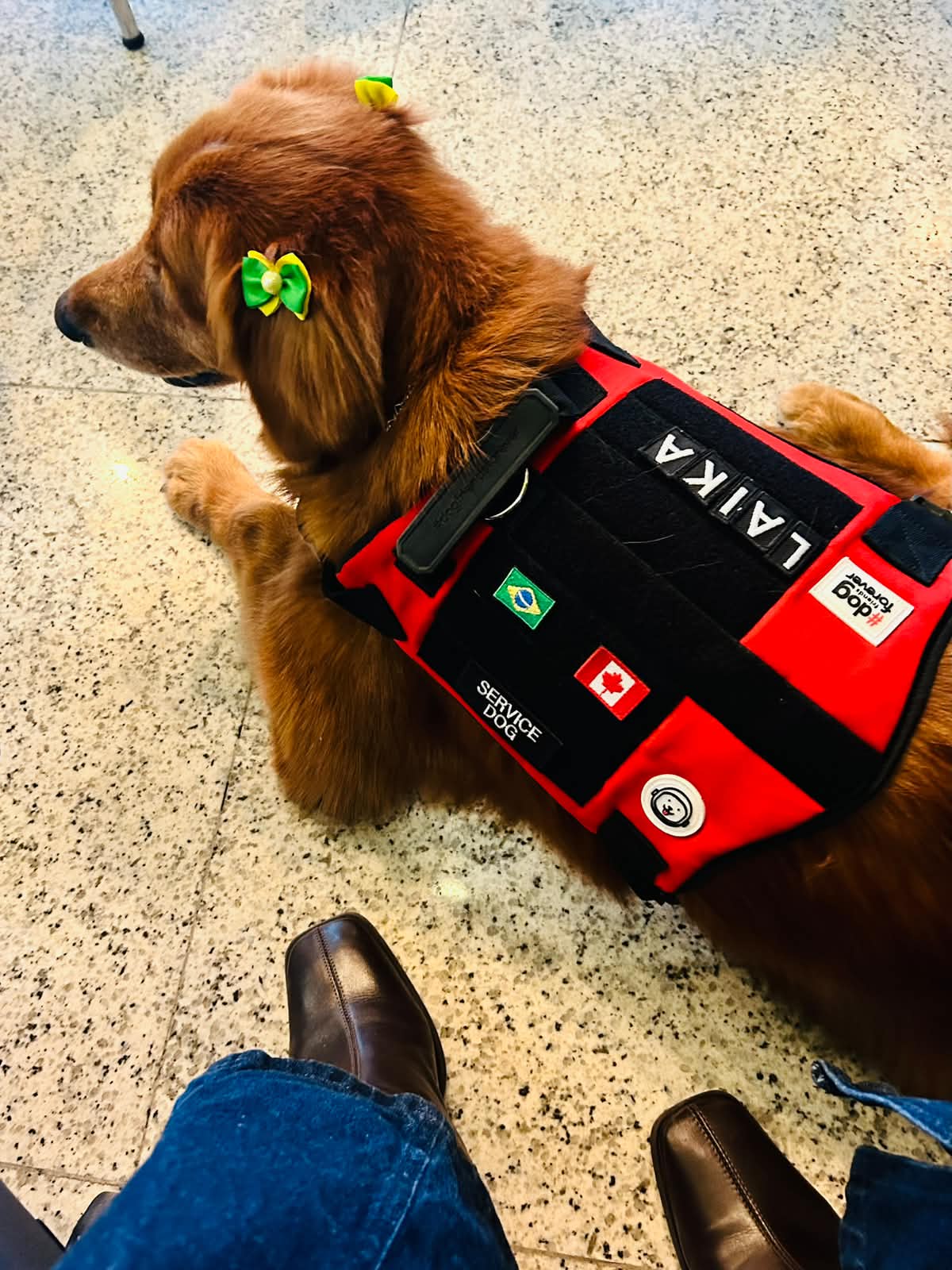
Golden Retrievers, Labrador Retrievers, and German Shepherds are among the most common service dog breeds — and they are all large dogs. A typical male Golden Retriever weighs 65 to 75 pounds and stands 23 to 24 inches at the shoulder. Fitting a dog this size into the floor space of a standard economy seat requires planning, the right seat, and a dog accustomed to lying in compact spaces.
The good news: thousands of handlers fly with large service dogs every week. It is entirely doable. The key is preparation — both in training your dog to settle calmly in tight spaces and in selecting the right seat and airline for your situation.
Seat Selection Is Everything
For handlers with large service dogs, seat selection is the single most important factor in flight comfort. Here is a ranking of seat types from best to worst:
- Bulkhead row: The clear winner. No seat in front means maximum floor space. Your dog can stretch out fully. Request this from the airline's accessibility desk at least 48 hours before departure.
- Exit row (when permitted): Some airlines allow service dogs in exit rows, others do not. If allowed, these offer excellent legroom. Check with your specific airline.
- Extra legroom economy: Seats marketed as "Economy Plus," "Comfort+," or "Even More Space" offer 4-6 additional inches of legroom. This can make the difference for a 70-pound dog.
- Window seat (standard economy): Better than middle or aisle because the dog can tuck against the wall and your feet, keeping fully out of other passengers' space.
- Aisle seat: Risky for large dogs. The dog may extend into the aisle, creating a tripping hazard and potential FAA compliance issue.
Training Your Dog for Tight Spaces
Large service dogs need specific training to lie calmly in confined aircraft spaces. Start this training well before your first flight:
- Practice the "tuck" command: Train your dog to curl into a tight ball on command. Use a mat or blanket to define the target space. Gradually reduce the mat size over several weeks.
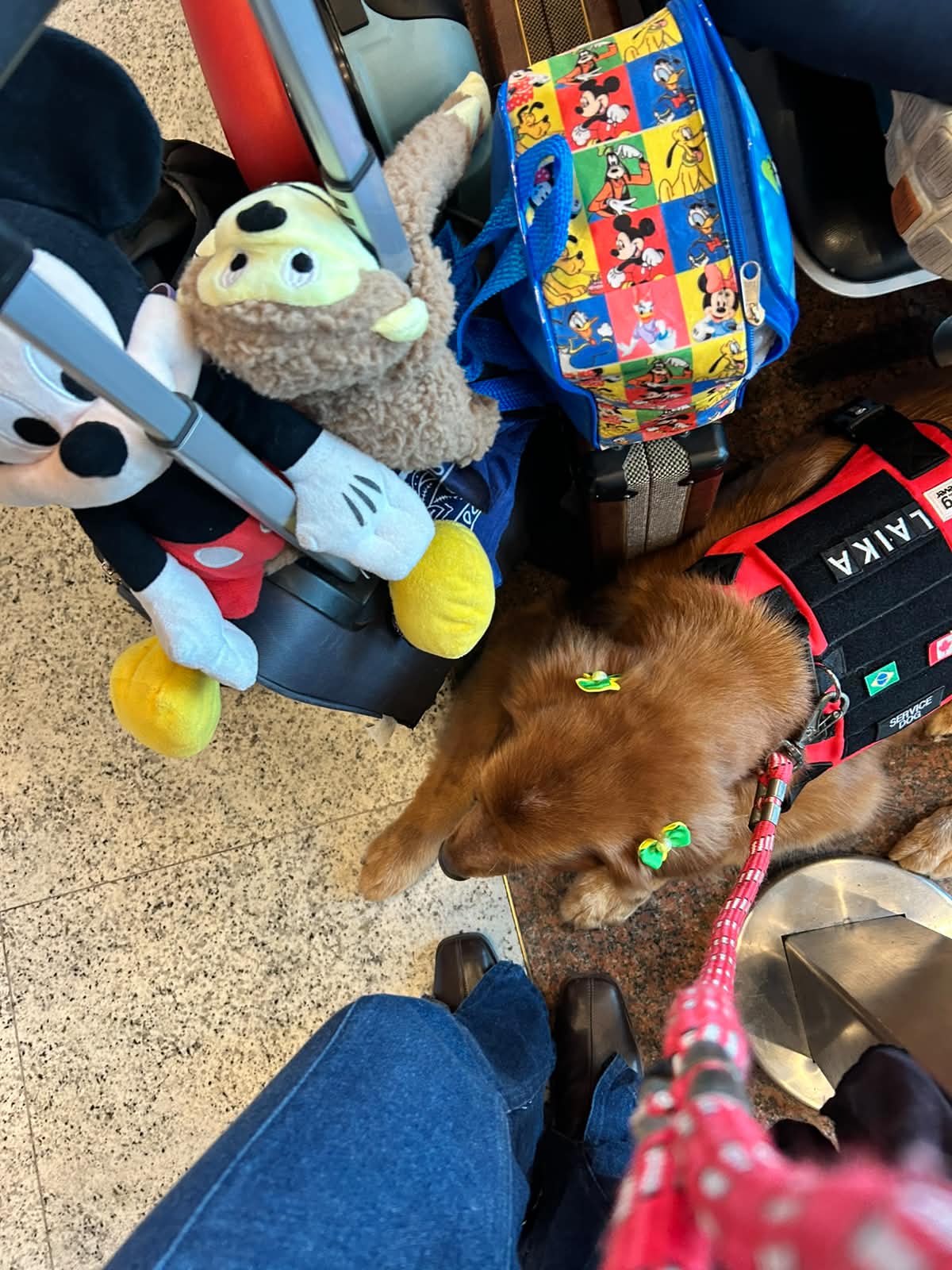
- Simulate aircraft dimensions: Create a floor space roughly 20 inches wide by 30 inches deep (standard economy) or 20 by 40 inches (extra legroom). Practice having your dog settle in this space for increasing durations.
- Duration building: Work up from 15 minutes to 2 hours, then 4 hours. Most domestic flights are 2-5 hours. Your dog needs to be comfortable for the full duration.
- Noise desensitization: Play recordings of aircraft engine noise, announcements, and turbulence sounds during training sessions.
Breed-Specific Considerations
Golden Retrievers
Goldens are among the most popular service dog breeds for a reason — their temperament is ideal for public access work. On planes, their main challenge is their thick coat, which can make them warm in confined spaces. Consider a cooling mat for longer flights. Goldens typically curl up naturally, making them surprisingly compact despite their size. Most experienced Golden handler-pilots report that a bulkhead seat makes flying comfortable for both handler and dog.
Labrador Retrievers
Labs are slightly more compact than Goldens and often have an easier time fitting in standard economy legroom. Their shorter coat is an advantage in warm cabin environments. Labs are generally calm flyers and tend to fall asleep quickly once settled. A 60-pound Lab can typically fit in a standard window seat without much difficulty.
German Shepherds
German Shepherds are the tallest of the three most common large service dog breeds, with males reaching 26 inches at the shoulder. Their length and height make bulkhead seating virtually mandatory. Standard economy legroom is rarely sufficient for a full-grown male GSD. If a bulkhead is not available, consider extra legroom seating on a wide-body aircraft.
Create Your Service Dog Profile
Get your digital ID card, certificate, and QR verification page — instantly after registration.
Start Free Registration →Airline Policies for Large Service Dogs
All U.S. airlines must accommodate service dogs of any size under the Air Carrier Access Act. However, the DOT rule states that the dog must fit within the handler's foot space. For large dogs, here is how major airlines handle this:
- Delta: Will reseat handlers to bulkhead or adjacent empty seat if the dog cannot fit in standard legroom. Call their accessibility line 48+ hours ahead.
- United: Allows handlers to request seating accommodations for large service dogs. Their website specifically mentions this option.
- American: Recommends bulkhead for dogs over 40 lbs. Will work with handlers on seating when notified in advance.
- Southwest: Preboarding allows handlers to select the best available seat. With open seating, you control your own destiny.
- Alaska: Has been praised by large-dog handlers for proactively offering bulkhead seats when notified in advance.
No airline can deny boarding to a trained service dog because of its size. If they claim the dog is "too large," they must find an alternative accommodation on that flight or rebook you on a larger aircraft at no charge.
Day-of-Flight Tips for Large Dogs
- Exercise your dog before the airport. A tired dog is a calm dog. Take a long walk or play session 2-3 hours before your flight.
- Limit water intake 2 hours before boarding. Your dog should be hydrated but not needing a bathroom break mid-flight.
- Bring a compact mat or blanket. Aircraft floors are hard and cold. A thin mat helps your dog settle comfortably.
- Board early. Request preboarding or early boarding to get your dog settled before the cabin fills with passengers and carry-on bag activity.
- Use the relief area before boarding. Most airports have pet relief areas both pre- and post-security. Use them.
Documentation Makes Large Dogs Less Conspicuous
A large service dog attracts more attention than a small one. When you have a 70-pound Golden Retriever in the airport, people notice. Having a professional ServiceDog Profile digital ID card and a visible service dog vest signals immediately that this is a working animal — not someone trying to sneak a pet on board. This reduces questions from both staff and other passengers, making the entire experience smoother.
It Gets Easier Every Time
The first flight with a large service dog can feel daunting. The logistics seem complex. But experienced handlers report that after 2-3 flights, the process becomes routine. Your dog adapts quickly, learns to settle the moment they reach the floor space, and often sleeps through the entire flight. With the right seat, proper preparation, and good documentation, flying with a large service dog is a manageable — even unremarkable — experience.