The Honest Truth Up Front
Let's start with what matters most: no federal law in the United States requires a service dog to carry an ID card, wear a vest, or be registered in any database. Under the ADA, your service dog's legitimacy comes from its training — not a piece of plastic. Anyone who tells you that you "must" have an ID card to have a legitimate service dog is wrong.
Now here's the equally honest truth: having a professional service dog ID card makes your daily life significantly easier. Not because the law requires it, but because the real world is full of people — hotel clerks, airline gate agents, store managers, Uber drivers — who are more confident when they can see or verify credentials. An ID card bridges the gap between what the law says and how the world actually works.
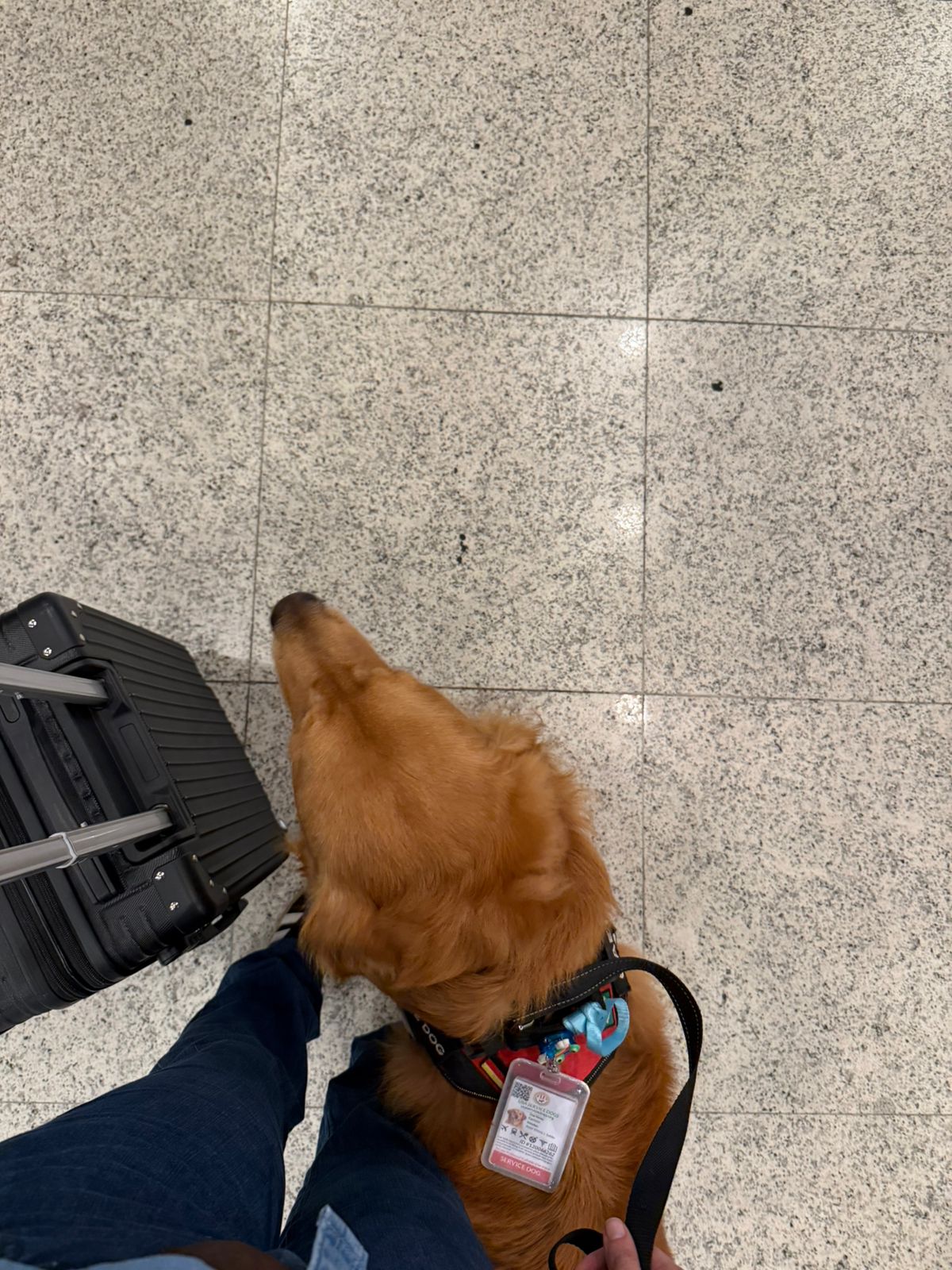
Where an ID Card Makes a Real Difference
At Airlines and Airports
Airlines are among the most documentation-heavy environments a service dog handler encounters. Gate agents are trained to verify service animals, and while they can legally only ask the two ADA-permitted questions, having an ID card you can flash or a QR code they can scan shortens the interaction from minutes to seconds. During boarding rushes with 150+ passengers queuing, a quick verification keeps you moving.
TSA officers, while not responsible for verifying service dog status, are also more comfortable when they see professional credentials. The security process goes smoother when there is zero ambiguity about why there is a dog in the checkpoint lane.
At Hotels
Hotels are required under the ADA to allow service dogs, cannot charge pet fees, and can only ask the two standard questions. In practice, front desk staff vary wildly in their ADA training. Some check you in without blinking. Others call a manager, consult a binder, or express hesitation. A professional ID card with verifiable information resolves the situation immediately. The front desk clerk sees the card, feels confident, and processes your check-in normally.
At Stores and Restaurants
Most retail encounters are smooth. But when a store employee does challenge you — and it happens — having an ID card de-escalates the situation before it becomes confrontational. You are not legally required to show it, but choosing to show it often turns a tense moment into a non-event. The employee sees the card, nods, and moves on.
With Rideshare Drivers
Uber and Lyft drivers are legally required to accommodate service dogs under the ADA. Despite this, service dog handlers report being denied rides with disturbing frequency. When a driver sees a professional ID card or a verified profile, they are less likely to cancel the ride. It is not a guarantee, but it reduces friction considerably.
What a Good Service Dog ID Card Should Include
Not all ID cards are created equal. A credible, professional service dog ID should include:
- Dog's name and photo: Clearly identifies the specific animal.
- Handler's name: Connects the dog to its handler.
- Service dog designation: Clearly states the animal is a service dog.
- Unique registration number: Provides a reference that can be looked up.
- QR code linking to a verification page: This is the most important feature. Anyone who scans the QR code should be taken to a page that confirms the dog's registration status in real time.
- Professional design: A poorly designed card undermines credibility. It should look official, clean, and well-produced.
Create Your Service Dog Profile
Get your digital ID card, certificate, and QR verification page — instantly after registration.
Start Free Registration →The QR Verification Advantage
The single most valuable feature of a modern service dog ID is QR code verification. Here is why it matters:
A static ID card — even a well-designed one — is just a piece of plastic or a digital image. Anyone could theoretically create one. But when that card includes a QR code that links to a live verification page on a legitimate registry website, it becomes something fundamentally different. The person scanning it sees real-time confirmation from a third party. This is the difference between showing someone a business card and showing them a LinkedIn profile that verifies your employment.
ServiceDog Profile generates a unique QR verification page for every registered service dog. When anyone scans the code, they see the dog's name, photo, registration status, and registration date — all hosted on the ServiceDog Profile website. This third-party verification is what gives the ID card its practical power.
Red Flags: ID Cards to Avoid
The service dog ID industry has its share of questionable products. Be cautious of:
- Cards that claim to "certify" your dog: There is no official government certification for service dogs. Any card claiming to provide one is misleading.
- Cards that claim legal authority: No ID card grants legal rights. Your rights come from the ADA, ACAA, and FHA — not from any card or registry.
- Cards without verification: A card without a QR code or any way to verify the information is just a printed image. It offers minimal practical value.
- Extremely expensive packages: Some companies charge hundreds of dollars for cards bundled with unnecessary accessories. A professional digital ID with QR verification should be affordable.
Digital vs. Physical Cards
Digital ID cards stored on your phone have several advantages over physical plastic cards:
- Always with you: You always have your phone. Physical cards can be lost or forgotten.
- Easy to update: If your dog's photo or information changes, the digital card updates instantly.
- QR code is always scannable: A phone screen displays a clean, bright QR code that scans easily in any lighting condition.
- Shareable: You can send the verification link to a hotel or airline in advance via email.
That said, some handlers prefer having both — a digital card for daily use and a physical card as a backup. The best services offer both options.
The Verdict: Practically Invaluable
Is a service dog ID card legally required? No. Is it worth having? Absolutely. The time and stress it saves across dozens of real-world interactions — at airports, hotels, stores, restaurants, and rideshares — makes it one of the most practical investments a service dog handler can make. The key is choosing a professional service with QR verification, transparent pricing, and no misleading legal claims.
If you are a service dog handler who interacts with the public regularly — and that is most handlers — a quality ID card with QR verification will pay for itself in avoided confrontations and smoother interactions within the first week of use.