Two Very Different Legal Designations
The terms "emotional support animal" and "service dog" are often used interchangeably in casual conversation, but they are fundamentally different under U.S. law. Understanding the distinction matters because it determines where your animal can go, what rights you have, and what documentation you need. In 2026, these differences are more important than ever as regulations continue to evolve.
What Is a Service Dog?
Under the Americans with Disabilities Act (ADA), a service dog is a dog that has been individually trained to perform specific tasks or do work directly related to a person's disability. The key word is "trained" — the dog must perform a task that mitigates the handler's disability. Examples include:
- Guiding a person who is blind or has low vision
- Alerting a person who is deaf or hard of hearing
- Pulling a wheelchair or providing balance support
- Interrupting self-harming behaviors during a psychiatric episode
- Alerting to oncoming seizures or changes in blood sugar
- Performing deep pressure therapy during panic attacks
Service dogs have the broadest access rights of any assistance animal. Under the ADA, they are permitted in virtually all public places — restaurants, stores, hospitals, hotels, government buildings, and more. There is no registration or certification required by federal law, and businesses may only ask two questions: whether the dog is required because of a disability, and what task it has been trained to perform.
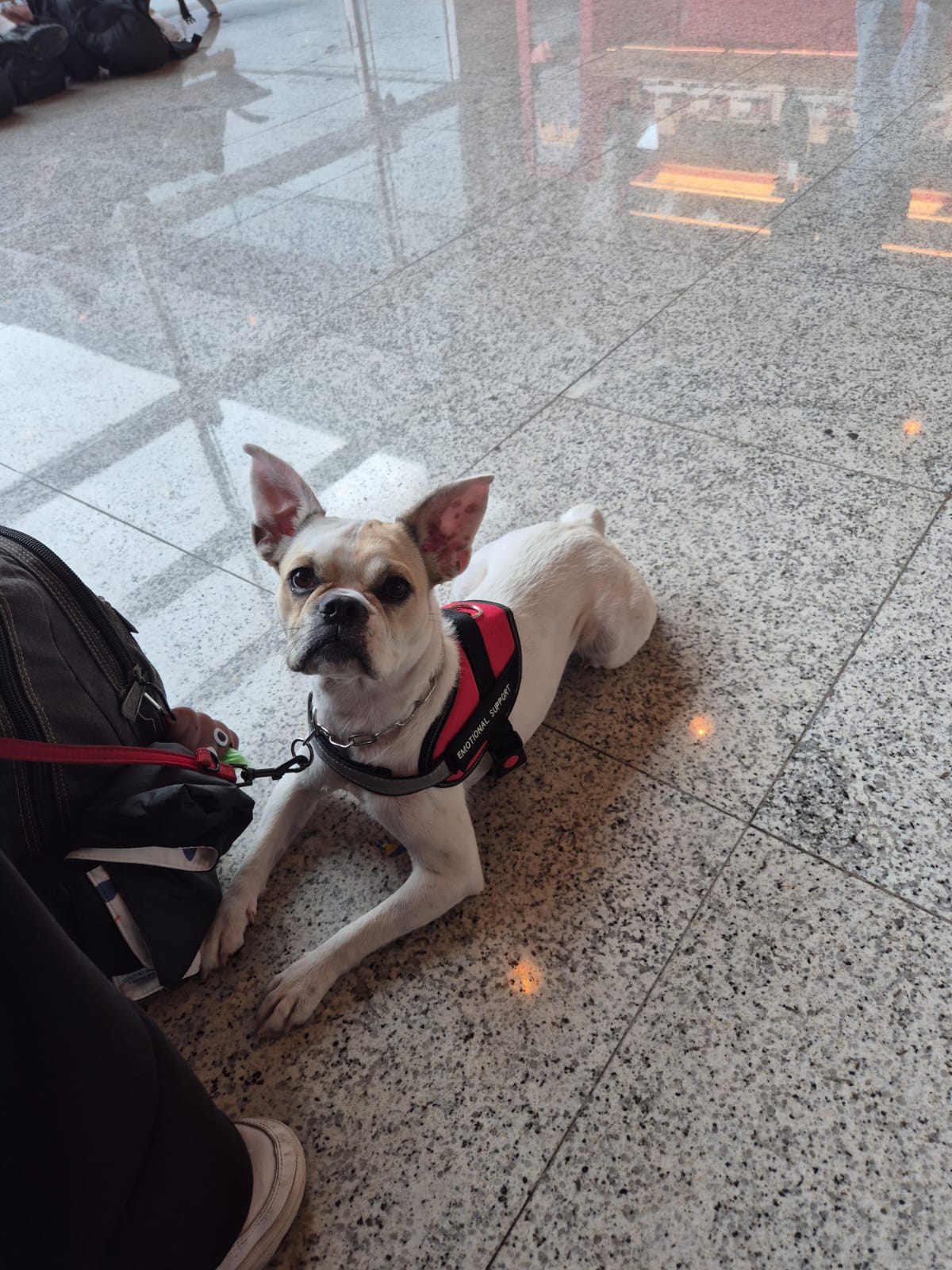
What Is an Emotional Support Animal (ESA)?
An emotional support animal provides comfort and emotional benefit to a person with a mental health condition simply through its presence. Unlike a service dog, an ESA does not need to be trained to perform any specific task. The animal's companionship itself is considered therapeutic.
ESAs are not limited to dogs — they can be cats, rabbits, birds, or other animals. The legal basis for ESAs comes primarily from the Fair Housing Act (FHA), not the ADA. This is a critical distinction that affects where the animal is allowed.
Access Rights: Where Each One Can Go
Public Places (Stores, Restaurants, etc.)
Service dogs: Full access under the ADA. Businesses cannot deny entry to a service dog team.
ESAs: No right of access. Businesses can legally deny entry to emotional support animals. An ESA is treated the same as a pet in public places.
Housing
Service dogs: Protected under both the ADA and the Fair Housing Act. Landlords must allow them with no pet fees or deposits.
ESAs: Protected under the Fair Housing Act. Landlords must make reasonable accommodations for ESAs, including waiving pet fees, as long as the tenant provides a valid ESA letter from a licensed mental health professional. However, some states have tightened ESA letter requirements in recent years.
Air Travel
Service dogs: Protected under the Air Carrier Access Act (ACAA). Airlines must allow trained service dogs in the cabin at no extra charge, though handlers may need to submit DOT forms in advance.
ESAs: As of the 2021 DOT rule change, airlines are no longer required to accommodate ESAs. Most major U.S. airlines now treat ESAs as pets, requiring a carrier and standard pet fees. This remains the case in 2026.
Register Your Service Dog
Get your digital ID card, certificate, and QR verification page — recognized at airlines, hotels, and businesses nationwide.
Start Free Registration →ESA Letters: What They Are and What They Are Not
An ESA letter is a document written by a licensed mental health professional (psychologist, psychiatrist, licensed clinical social worker, or therapist) stating that the patient has a mental health condition and that an emotional support animal is part of their treatment plan. A valid ESA letter must:
- Be written on the professional's letterhead
- Include their license number and state of licensure
- Be dated within the past year (many landlords require annual renewal)
- Specifically state that the animal provides emotional support for a diagnosed condition
An ESA letter does not make your animal a service dog. It does not grant ADA public access rights. It does not allow your animal on flights as a service animal. Its primary legal function is to secure housing accommodations under the FHA.
Can an ESA Become a Service Dog?
Yes — if the animal is a dog and it is individually trained to perform specific tasks related to your disability, it can qualify as a service dog under the ADA. The transition requires actual task training, not just a change in paperwork. Many psychiatric service dogs started as emotional support animals before their handlers trained them to perform specific tasks like alerting to anxiety attacks, performing deep pressure therapy, or interrupting harmful behaviors.
If your dog performs trained tasks for your disability, you can create a verified profile on ServiceDog Profile that documents your dog's training and provides a professional digital ID card.
The Problem with Online ESA Registries
The internet is full of websites selling "ESA registration" or "ESA certification" for a fee. These are not recognized by any federal or state agency. The only document that matters for ESA housing rights is a letter from your own licensed mental health professional. Paying $50-$200 for a certificate or ID card from an online registry provides zero legal standing.
Similarly, there is no official government registry for service dogs. However, voluntary digital ID services like ServiceDog Profile provide practical tools — verifiable ID cards, QR codes, and professional profiles — that help legitimate handlers navigate daily life more smoothly. The distinction is that these tools supplement your rights, not create them.
Summary: Key Differences at a Glance
- Training: Service dogs must be task-trained; ESAs require no training
- Species: Service dogs must be dogs (or miniature horses); ESAs can be any animal
- Public access: Service dogs yes (ADA); ESAs no
- Housing: Both protected under FHA
- Air travel: Service dogs protected (ACAA); ESAs treated as pets since 2021
- Documentation: Service dogs need no documentation; ESAs need a letter for housing
Know Your Rights, Know the Difference
Whether you have a service dog or an emotional support animal, understanding your specific legal protections helps you advocate for yourself effectively. Misrepresenting an ESA as a service dog is illegal in most states and harms the disability community. If your dog is a trained service dog, having a clear, professional profile makes every interaction easier — from boarding a flight to checking into a hotel.